

A Brief Guide to Simulcast Rights in Film Licensing Agreements
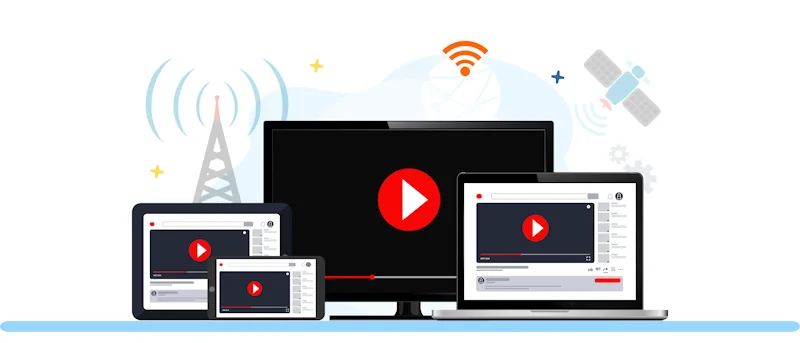
A viewer opens a broadcaster’s app at 8:00 p.m. and starts watching a film. At almost exactly the same moment, another viewer is watching that same film on the broadcaster’s television channel. The picture is the same, the program is at the same point, and neither viewer chose when the film would begin.
It looks like one broadcast.
From a rights perspective, however, there may be more than one right involved.
This is where simulcast rights become important. A simulcast allows a program being transmitted through one traditional channel, such as television, to be transmitted simultaneously through another channel, often an internet-based service. For broadcasters and distributors, it can be a natural way to extend an existing linear service to audiences watching on websites, mobile apps, connected TVs and other digital platforms.
The important part is that simulcasting is about simultaneous transmission. It is different from putting a film into a streaming library and allowing viewers to watch it whenever they choose.
What Exactly Is a Simulcast?
The easiest way to understand a simulcast is to think about what is happening on the viewer’s screen.
If a television network is showing a film at 9:00 p.m. and its website is carrying that same program at 9:00 p.m., the website is effectively carrying a digital version of the linear broadcast. The viewer doesn’t choose the starting point. They join the program while it is already being transmitted.
That is the basic idea behind a simulcast.
In licensing terms, simulcast rights are often described using concepts such as simultaneous, linear, real-time and non-interactive viewing. The exact definition can vary from agreement to agreement, which is one reason it is important to define the right clearly rather than relying on the word “simulcast” alone.
The distinction matters because a licensee may have the right to broadcast a film but not necessarily the right to make that broadcast available through every digital platform.
Is Simulcast a Separate Right?
It is useful to make an important distinction here: simulcast is not necessarily a standalone primitive right in the same sense as broadcast, reproduction or digital transmission. For rights-management purposes, it is often more useful to think of simulcast as a particular way of exercising underlying rights.
A simple way to think about it is:
Simulcast = broadcast + digital transmission + simultaneous/linear timing
In practical terms, a simulcast involves the transmission of a program through a digital channel at the same time as its linear broadcast. The word “simulcast” therefore describes how the content is being delivered, including the simultaneous and linear nature of the transmission, rather than automatically defining an entirely separate category of copyright right.
The legal characterization can vary by jurisdiction and by the subject matter involved. For example, U.S. copyright law specifically defines “simulcast” in the context of television broadcast streams, while WIPO materials distinguish between rights in the underlying content and rights associated with the broadcast or transmission itself.
This distinction is especially important when structuring a licensing agreement or a rights-management system. Rather than treating broadcast, streaming, VOD and simulcast as if they were all equivalent types of rights, it can be more useful to distinguish between the underlying right and the way that right is being exercised.
For example, a license might grant a broadcaster the right to broadcast a film and also permit the broadcaster to transmit that linear broadcast simultaneously through its website and mobile application. In a rights-management system, the underlying rights and the simulcast use can therefore be captured separately, with the simulcast carrying additional details such as platform, territory, timing, audience and restrictions.
This approach also makes the rights structure more adaptable as new forms of distribution emerge. The technology and delivery method may change, while the underlying rights and the conditions attached to their use can continue to be managed separately.
Simulcast Is Not the Same as On-Demand Streaming
This is probably the most important distinction to make when discussing simulcast rights.
Imagine a broadcaster has licensed a film for television. During the license period, it decides to make its television channel available through its website. If the website carries the channel at the same time as the television broadcast, that may be a simulcast.
Now imagine the broadcaster takes the same film and places it in an online library where subscribers can watch it at any time during the next 30 days. That is a very different use of the content.
The first example is tied to a linear broadcast schedule. The second gives the viewer on-demand access.
The same film can therefore involve several different digital uses or exploitation methods:
- Simulcast: Digital transmission at substantially the same time as the linear broadcast.
- Catch-up or replay: Access to the program for a defined period after the original broadcast.
- VOD: The viewer chooses when to watch the program.
- Download: The viewer receives or stores a digital copy under defined conditions.
These rights may be negotiated together, but they should not automatically be treated as interchangeable.
Why Simulcast Rights Matter in a Film Licensing Deal
For audiences, the difference between television and internet distribution can feel almost invisible. A viewer may simply press play on a phone instead of turning on a television.
For the parties negotiating the license, however, that difference can matter.
A film licensing agreement may carefully define where, when and how the licensee can exploit the content. It may grant television rights in a particular territory but limit digital distribution. It may allow streaming only on certain platforms. It may also contain restrictions around exclusivity, advertising, audience or geographic access.
Adding a simulcast service can therefore change the practical reach of the licensed rights.
This is particularly important as broadcasters increasingly distribute their linear channels through digital platforms. A traditional television service may now have a website, mobile app, connected TV application and other digital outlets. If those services are intended to carry the licensed programming simultaneously, the agreement should make that intention clear.
What Should Be Covered in a Simulcast Right?
There isn’t one universal formula for writing a simulcast provision. The right should reflect the actual business arrangement between the parties.
At a minimum, it is useful to establish what is being simulcast, where it can be transmitted, who can access it, when it can be transmitted, and how long the right lasts.
The platform is one of the first things to consider. Is the licensee allowed to simulcast through its own website and mobile application? What about connected TV apps? Can it use a third-party platform? A broad reference to “digital platforms” may create questions later if new distribution channels are introduced.
Territory is equally important. A television license might cover the United States, while an internet transmission could potentially be viewed from almost anywhere. The agreement may therefore need geographic restrictions or technical measures such as geoblocking to keep the digital transmission within the licensed territory.
Timing also needs to be clear. A simulcast will generally be tied to the linear broadcast. But the parties may want to allow a short delay, or they may want to address situations where a program cannot be transmitted digitally because of a restriction affecting a particular territory or platform.
The agreement should also establish the license term. Does the simulcast right apply for the entire license period? Does it apply only to particular broadcast windows? Does it end when the underlying broadcast right expires?
These details can seem minor when the agreement is being negotiated, but they become important when someone needs to determine whether a particular use is permitted months or years later.
What Happens to the Advertising?
Advertising is another area where simulcast rights can become more complicated.
Suppose the television broadcast contains several commercial breaks. Does the online simulcast have to carry exactly the same advertising? Can the licensee replace television advertisements with digital advertisements? Can additional advertising be inserted?
There isn’t necessarily one right answer. It depends on the deal.
For that reason, advertising provisions may need to address whether the simulcast must remain identical to the original broadcast or whether certain substitutions are allowed. Depending on the business model, the agreement might also address digital advertising revenue, sponsorships, promotional material and reporting.
For a licensee operating a commercial digital service, this can be just as important as the right to transmit the film itself.
Territory, Language and Other Restrictions
Digital distribution makes territory and language restrictions particularly important.
A film may be licensed for broadcast in one country and one language but have different rights or restrictions in another market. A particular title may also be subject to an existing agreement that prevents it from being transmitted digitally in certain territories or languages.
In those situations, a simulcast may need to be restricted for viewers in specific locations.
A licensing agreement can address these situations directly by establishing rules for territorial restrictions, unavailable programs, replacement content or other limitations. This helps prevent the operations team from having to interpret the contract every time a special situation occurs.
The same principle applies to other licensing conditions. If the licensee can only simulcast to authenticated subscribers, for example, that should be clear. If recording or downloading is prohibited, the agreement should say so. If certain devices or platforms are excluded, those limitations should also be captured.
The Difference Between a Broad Right and a Useful Right
One of the easiest mistakes in rights management is assuming that a broad phrase automatically provides clarity.
For example, a contract might say that the licensee has the right to “stream” a film.
But what does that actually include?
Does it include a live simulcast of a television broadcast? Does it include catch-up viewing? Does it include a mobile app? A connected TV? A third-party platform? Can viewers watch outside the licensed territory?
The answers may be obvious to the people negotiating the agreement at the time. A year later, they may not be obvious at all.
A well-defined right should make it possible for someone who was not involved in the original negotiation to look at the agreement and understand what is permitted.
That is especially valuable when rights information moves from the contract into a rights-management system such as MediaRights.
Capturing Simulcast Rights in MediaRights
The contract is only the beginning.
Once a deal has been signed, licensing and operations teams need to be able to answer practical questions quickly:
Can we simulcast this title? Where can we do it? Until when? On which platforms? Are there restrictions?
If that information exists only in a long PDF or email thread, answering those questions can take time and often requires someone to interpret the original agreement.
This is where MediaRights can help. Instead of leaving important rights information buried in contracts and other documents, MediaRights provides a structured way to record and manage the rights granted under a deal.
For example, a simulcast use can be captured as a dedicated rights record. The record can identify the title, underlying right, simulcast use, platform, territory, language and license period, along with important details such as whether the transmission must be simultaneous with the linear broadcast, the permitted audience, which devices are supported, whether the underlying right is exclusive, and whether territorial restrictions or reporting requirements apply. These structured details can then be used to calculate and report availability based on the applicable rights, territories, languages, dates, platforms and restrictions.
A licensing manager could then quickly see something like: Film A — Broadcast — Simulcast via Network Website and Mobile App — United States — January 1 through December 31, 2027 — authenticated subscribers only — territorial restrictions apply.
This approach preserves an important distinction: the underlying right tells you what the licensee is authorized to do, while the simulcast information describes how that right is being exercised and under what conditions.
The value of capturing this information in MediaRights is not simply better organization. It creates a clearer connection between the contractual language and the actual business decisions licensing and operations teams need to make.
A licensing manager doesn’t want to read a 40-page agreement every time someone asks whether a film can be simulcast in a particular territory. They want to see the answer quickly, with enough detail to understand the limits of the right. With the relevant terms structured in MediaRights, those details can be easier to find, review, track and manage throughout the life of the license.
Questions Worth Asking Before Granting Simulcast Rights
Before finalizing a film licensing agreement, it is worth stepping back and asking a few practical questions:
- What underlying right is being exercised through the simulcast?
- What exactly is being transmitted?
- Which platforms and devices are included?
- Which territories are covered?
- Does the digital transmission have to be simultaneous with the linear broadcast?
- Are delays permitted?
- Who can access the simulcast?
- Are geographic restrictions required?
- Can advertisements be replaced or inserted?
- Is the underlying right exclusive or non-exclusive?
- Are additional fees or revenue-sharing arrangements involved?
- What reporting is required?
- What happens when the underlying broadcast right expires?
The answers don’t need to be complicated. They simply need to be clear.
Looking Beyond the Word “Simulcast”
As media distribution continues to evolve, the word “simulcast” may become less important than the actual rights behind it.
A broadcaster may distribute the same content through television, websites, apps, connected TVs and other services. New platforms may appear during the life of a licensing agreement. Business models may change. Audiences may move from one device to another without thinking about the underlying distribution rights at all.
The contract, however, still needs to keep up.
That is why simulcast rights can be viewed as part of a larger rights picture. The goal is not simply to determine whether something can be distributed digitally. The goal is to understand how the content can be distributed, through which channels, in which territories and languages, during which periods and under what conditions.
This is also why separating underlying rights from exploitation methods or modalities can be valuable in a rights-management system. A new delivery method does not necessarily require creating an entirely new primitive right. Instead, the system can preserve the underlying right while recording the particular way in which that right is being exercised.
Once these rights and conditions are structured, they can also support availability calculation and reporting. Instead of simply storing what was granted in a contract, a rights-management system can use the underlying rights, territories, dates, platforms, exclusivity, holdbacks and other restrictions to determine where and when a title is actually available for simulcast or other forms of distribution. This makes availability reporting a practical extension of rights management, helping licensing and operations teams understand not only what rights they hold, but also where those rights can currently be exercised.
Final Thoughts
Simulcasting sits in an interesting space between traditional broadcasting and digital distribution. To the viewer, it can feel like a simple extension of television. For the people managing film rights, it can involve a much more specific set of rights and conditions.
A well-structured licensing agreement should make those permissions clear. And once the deal is signed, those rights should be captured in a way that makes them easy to understand, manage, calculate and report.
The best rights-management approach is ultimately about turning complicated agreements into usable information. When a team can quickly answer what can be shown, where, when, how and under what restrictions, they can also determine what is currently available and produce reliable availability reports without repeatedly searching through contracts.
That is what makes clearly defined simulcast rights valuable—not just when a deal is being negotiated, but throughout the entire life of the deal.