
From Telecast to Catch-Up: A Closer Look at Post-Telecast VOD Rights in Media Licensing
The program ends. The credits roll. The television transmission stops.
But from a rights perspective, the story may have only just begun.
In the traditional television model, the end of a telecast was relatively easy to identify. A program was transmitted at a scheduled time, to a defined audience, through a defined channel. Once the transmission ended, the immediate linear exploitation of that program was, for practical purposes, over.
The digital environment has changed that equation.
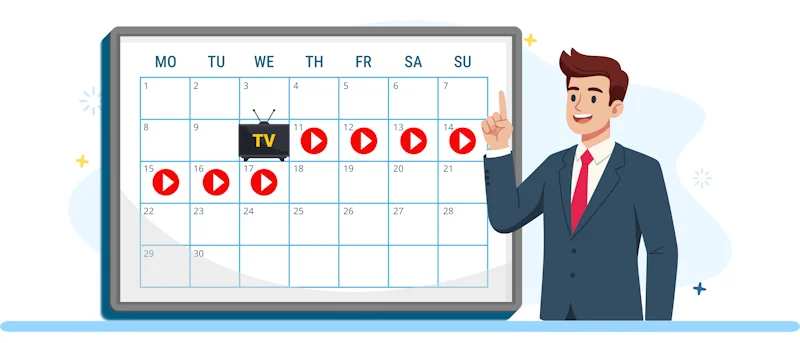
Today, a viewer who misses the 9 p.m. telecast may watch the same program later that evening, the following morning or several days later through a broadcaster’s digital platform. The program may no longer be on air, but it remains commercially and technologically available.
This is the space occupied by catch-up video-on-demand (VOD) rights.
What appears to the viewer as a simple convenience—“Watch it later”—can represent a separately negotiated and carefully defined bundle of contractual permissions. For licensors and licensees alike, the question is no longer simply who can telecast the program? It is also:
Who can make the program available after the telecast, for how long, on which platforms, in which territories and on what terms?
That is where post-telecast VOD rights become particularly important.
From Linear Television to On-Demand Viewing
The distinction between linear broadcasting and on-demand availability is fundamental.
A linear telecast generally follows a scheduled transmission model. The broadcaster determines when the program is made available, and viewers consume it at that scheduled time.
On the other hand, a catch-up service introduces an element of viewer choice. The program has already been transmitted, but the viewer is permitted to access it subsequently for a defined period.
This seemingly modest shift has significant implications for rights licensing.
A media license that grants television or broadcast rights may therefore need to be examined carefully to determine whether it also permits:
- making the program available after its initial transmission;
- streaming the program through a website or application;
- offering the program for a specified catch-up period;
- making the program available through connected-TV platforms;
- inserting advertising into the catch-up stream;
- allowing access through third-party platforms; or
- retaining the program beyond the agreed catch-up window.
The important point is that catch-up is not merely about timing. It can affect the scope, value and exclusivity of the underlying rights.
Catch-Up Is More Than Just “Watching Later”
From a viewer’s perspective, catch-up may appear to be nothing more than delayed viewing. However, from a licensing perspective, it raises a series of separate questions.
Consider a simple grant:
“The Licensee shall have the exclusive television rights to the Program.”
Does that language, by itself, permit the Licensee to place the Program online for seven days following its television transmission?
The answer may depend on the wording of the agreement, applicable law, the nature of the rights granted and the commercial understanding between the parties.
This is why modern media licensing agreements increasingly need to distinguish between different forms of exploitation rather than relying on broad expressions such as “television rights,” “broadcast rights,” or “digital rights.”
A carefully drafted agreement should make clear what happens after the telecast.
The Catch-Up Window: A Small Period With Significant Consequences
One of the defining characteristics of catch-up rights is the duration of the availability window. While the right may exist for a specific period—such as 24 hours, 48 hours, 7 days, 14 days, 30 days, or another negotiated timeline—this duration carries substantial commercial significance rather than merely operational utility.
For instance, a seven-day catch-up window can create a materially different exploitation opportunity from a 90-day post-telecast availability period. As the window expands, the arrangement may begin to resemble broader VOD exploitation rather than a narrowly defined catch-up service.
The agreement should therefore specify not only the length of the window, but also the event that starts the clock and the event that ends it.
The Core Dimensions of Catch-Up Rights
A useful way to analyze post-telecast VOD rights is through four core rights dimensions:
1. Scope
What exactly may the licensee do?
Does the right cover:
- full episodes only;
- edited versions;
- trailers and promotional material;
- subtitles and dubbed versions;
- clips;
- downloads;
- streaming only; or
- access through third-party platforms?
A broad grant can create unintended overlap with other rights retained by the licensor.
2. Duration
How long can the program remain available?
The agreement should identify the beginning and end of the catch-up period with precision.
Questions may include:
- Does the window begin immediately after the first telecast?
- Does each repeat telecast create a new window?
- Does the window run from the scheduled transmission or the actual transmission?
- What happens if the program is delayed?
- Does an interrupted transmission affect the window?
These questions become particularly relevant for series, sports programming, live events and programs with multiple transmissions.
3. Territory and Language
Where can the program be accessed and in which language versions?
A program may be licensed for television in a particular territory and in specified language versions, but digital distribution can make territorial and language restrictions more difficult to implement and enforce in practice.
The agreement may therefore need to address:
- territorial scope and licensing availability (a legal/contractual question);
- authorized language versions, including dubbing and subtitling rights (a legal/contractual question);
- geo-blocking and platform-specific controls (a technical implementation question); and
- cross-border access and the practical enforcement of territorial and language restrictions.
4. Exclusivity
Perhaps the most commercially sensitive issue is who controls the catch-up window.
A licensee may have exclusive television rights but not necessarily exclusive digital rights. Conversely, a broadcaster may expect its catch-up service to form part of the value of its exclusive television package.
This makes the relationship between broadcast exclusivity and catch-up exclusivity an important contractual consideration.
The Repeat Telecast Problem
One particularly interesting drafting issue arises where a program is transmitted more than once.
Suppose a program is first telecast on Monday and repeated on Wednesday.
If the contract grants a seven-day catch-up period “following telecast,” when does the period expire?
There are at least two possible interpretations:
- seven days from the first transmission; or
- seven days from each transmission.
The difference can materially extend the period during which the program remains available.
The same issue can arise with:
- multiple episodes;
- regional feeds;
- delayed transmissions;
- repeat broadcasts;
- special encore transmissions; and
- changes to the broadcast schedule.
A catch-up clause should therefore be drafted around specific triggering events, rather than relying exclusively on general expressions such as “after broadcast.”
Catch-Up VOD and the Boundary of the License
A contractual grant intended to permit seven days of catch-up availability should not, through loose drafting, operate in practice as an unlimited VOD grant.
It helps to think of content availability as a spectrum, moving from the most temporary to the most permanent:
Telecast → Catch-Up → Extended VOD → Catalog VOD
Each stage can represent a different commercial proposition and depending on the market and deal structure, these forms of exploitation may be licensed separately, to different parties, at different price points.
As availability moves further along this spectrum—from a short catch-up window toward long-term or permanent access—it becomes harder to justify treating that exploitation as merely “ancillary” to the original telecast. At some point, the commercial and contractual character of the exploitation may shift from supporting the broadcast to functioning as a standalone VOD offering.
This matters most when different parties hold rights to different stages of that chain. If a catch-up grant is allowed to blur into catalog-length availability, it can undercut the value of catalog VOD rights owned separately—whether by another licensee or by the licensor itself.
The Platform Question
Another issue that has become increasingly important is where catch-up content can be made available.
While a traditional agreement may contemplate only a broadcaster’s own television channel and perhaps its own website, the modern distribution landscape involves a much wider, more complex ecosystem. Today, rights and distribution strategies may need to account for broadcaster-owned websites and apps, connected-TV services, third-party streaming platforms, operator platforms, aggregated VOD services and other digital interfaces.
Accordingly, the phrase “online catch-up” may no longer be sufficiently precise.
A well-structured grant must carefully consider whether the rights being conveyed are tied to a specific platform, a broader type of platform, or the licensee generally. This structural distinction can matter over the life of an agreement, particularly if the licensee subsequently shifts its technology stack or updates its distribution strategy. Failure to clearly define this scope up front can lead to contractual disputes if the original platform choice becomes obsolete.
Advertising and Monetization
Catch-up rights also raise a commercial question that is sometimes overlooked: “how is the content monetized?”
A catch-up program may be:
- ad-supported (AVOD);
- subscription-based (SVOD);
- available without additional charge (FVOD);
- bundled with another service; or
- monetized through a broader platform offering.
The agreement may therefore need to address whether advertising and other forms of monetization are included within the license.
This is especially relevant where the economic value of the catch-up service is not directly attributable to an individual program.
For example, a program may be made available as part of a broader subscription service rather than sold on a program-by-program basis. The licensing agreement may need to determine whether and how that exploitation is accounted for.
Catch-Up Rights and the Commercial Value of Exclusivity
Catch-up rights can significantly affect the commercial value of a primary license. A broadcaster acquiring exclusive television rights may view the ability to offer viewers a subsequent catch-up service as an important component of the overall rights package.
From the licensor’s perspective, however, granting an unrestricted digital catch-up right could limit its ability to exploit the program through VOD or other media during the same period.
The contractual task is therefore to define the boundaries between these forms of exploitation clearly, particularly where different parties hold rights to different windows.
Drafting the Catch-Up Clause: A Practical Checklist
A robust catch-up provision should answer a series of straightforward operational questions. At a minimum, the clause should address:
- Content: What is covered—full programs, specific episodes, clips, edited versions, dubbed or subtitled versions, or other material?
- Trigger: What event starts the catch-up period?
- Duration: When does the availability period begin and expire?
- Territory and language: Where may the content be accessed, and which language versions may be made available?
- Platforms: On which websites, applications, connected-TV services, or third-party platforms may it be made available?
- Exclusivity: Is the right exclusive or non-exclusive?
- Third parties: May the licensee sublicense or distribute the content through third parties?
- Monetization: May the content be monetized through advertising, subscriptions, transactional access, or broader platform bundles?
- Expiry: What happens when the catch-up period ends?
- Subsequent rights: Can the content transition into a separate VOD window, or must it be removed?
Because ambiguity in rights licensing is rarely neutral, precise definitions are paramount. Industry terms such as “Broadcast,” “Telecast,” “Catch-Up,” “VOD,” “Digital Platform,” “Availability Period,” and “Transmission” carry distinct legal and operational weight and should never be treated as interchangeable.
For example, defining “Catch-Up” strictly as “the availability of a program for seven days following its initial transmission” establishes a firm contractual boundary. By contrast, simply granting “the right to make the program available on demand following broadcast” leaves several critical questions open.
Ultimately, where the commercial value of a right depends so heavily on timing, territory, language and platform, ambiguity can become the starting point for a formal dispute.
As the media industry continues to move from scheduled viewing toward on-demand consumption, the catch-up window is becoming more than a convenience for viewers. It is becoming an increasingly important licensing window in its own right.
And in a world where the end of a telecast no longer necessarily means the end of exploitation, the drafting of that window deserves considerably more attention.
Managing the Complexity in Practice
The dimensions outlined above—scope, duration, territory, language, exclusivity, platform and monetization—are straightforward to describe but difficult to track at scale, particularly for distributors managing hundreds of programs across multiple territories, windows and platforms simultaneously.
This is precisely the kind of complexity that purpose-built rights management systems, such as MediaRights by MediaLogiq Systems, are designed to address. With real-time conflict-checking and precise availability calculations, MediaRights helps distribution teams confirm—before a deal is signed—whether a proposed catch-up window overlaps with an existing holdback, an already-licensed VOD window, or a territorial restriction elsewhere in the catalog.
Built-in support for holdbacks, reserved rights, and automated triggers and notifications means the boundaries discussed throughout this article don’t just live in the contract language—they can be tracked and operationalized systematically across the rights lifecycle.
For distributors navigating an increasingly fragmented, multi-platform catch-up landscape, that kind of real-time visibility is increasingly valuable for managing complex rights portfolios.