
Role of Language in Defining Media Distribution and Licensing Rights
In media rights management, value is rarely lost in dramatic ways. It slips away quietly—through vague definitions, assumed meanings and missing dimensions. Among these, language is one of the most underestimated and yet commercially decisive elements in modern distribution and licensing.
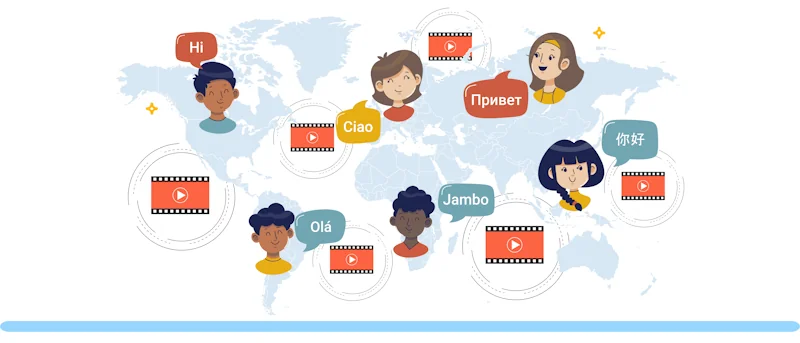
As content circulates globally across platforms, regions and audiences, rights are no longer defined solely by where or how content is distributed, but also by the language in which content can be made available. The precision with which language is defined—or ignored—directly affects ownership clarity, availability accuracy and licensing revenue.
Rights as a Multi-Dimensional Structure
Distribution and licensing rights are best understood as a dynamic, interconnected system composed of five essential dimensions:
Product (Intellectual Property)
The core content itself: a film, series, episode, format or derivative work.Distribution or Licensing Territory
The geographical regions where the rights can be exercised.Distribution or Licensing Language
The specific language(s) in which the content can be distributed or licensed.Distribution or Licensing Media or Right
The platform or medium through which the content is exploited (e.g., theatrical, TV, SVOD, AVOD, FAST, etc.).License Type
The nature of the grant—whether exclusive, non-exclusive or subject to holdbacks.
These dimensions are deeply intertwined and must be viewed as a unified rights framework. Altering or neglecting any one dimension doesn’t simplify rights management—it compromises its accuracy and effectiveness.
From Owned Rights to Licensed Rights
A distributor’s role extends far beyond simply handling content; it involves acquiring or owning distribution rights, which together form a comprehensive rights repository. This repository reflects the full spectrum of the distributor’s legal entitlements, detailing what content can be exploited and under what conditions.
When a distributor negotiates deals with platforms, broadcasters or digital services, it doesn’t transfer its full ownership of rights. Instead, it licenses specific subsets of those rights, crafting Licensed Rights that mirror the same five core dimensions. These include the product itself, defined territories, language(s), specific media platforms and the nature of the license, including its exclusivity and time frame.
This alignment between owned rights and licensed rights is crucial. Any system that fails to model these rights with the same level of precision and dimensional depth risks introducing significant errors and uncertainties into the licensing process, creating potential legal and financial pitfalls.
Why Language Is Not Optional
Language is often treated as an attribute rather than a right. This assumption may have worked in simpler distribution models, but it breaks down in today’s reality.
Language plays a pivotal role in determining several critical factors: it defines which audiences can legally access content, dictates whether multiple licensees can operate within the same territory and influences whether dubbed, subtitled or original-language versions can be exploited separately. It also impacts whether a distributor retains residual value to monetize.
For instance, a distributor may hold all-language rights in a specific territory, allowing them to control the content in every language. Alternatively, they might only have rights to certain languages, such as Arabic and English, but not French. In other cases, some languages may already have been licensed to other parties, while others remain under the distributor’s control.
Without language as an explicit dimension, these important distinctions become blurred, leading to potential confusion and legal complications.
MediaRights: Language as a First-Class Rights Dimension
MediaRights, the comprehensive rights management system from MedaLogiq Systems, recognizes language not as a secondary filter, but as a core structural dimension of rights.
Unlike systems that assume language is implicit within territory or media, MediaRights supports:
🗹 Local and specific languages within a territory
🗹 Multiple languages per right
🗹 All-language or any-language ownership
🗹 Language-agnostic licensing when appropriate
This flexibility reflects real-world rights contracts, not theoretical simplifications.
When All Languages Are Owned
In many cases, a rights owner or distributor holds rights for all languages within a territory. MediaRights accommodates this naturally:
🗹 The language dimension can be omitted when it is irrelevant
🗹 Or explicitly marked as “all languages”
🗹 Allowing licensing regardless of language without artificial constraints
This is a critical distinction: the system does not force unnecessary complexity, but it is ready when complexity exists.
Language Across Three Critical System Functions
MediaRights embeds language intelligently across three key operational areas, ensuring consistency from ownership to sales.
1. Distribution (Owned) Rights
At the ownership level, MediaRights allows distributors to precisely model:
🗹 Which languages are included in their rights
🗹 Whether rights are limited to specific language versions
🗹 Whether future language versions are covered
This creates a true representation of the rights repository, eliminating assumptions that often surface only when a deal is blocked—or worse, breached.
2. Availability Reports at Language Level
Availability reporting is where missing language dimensions cause the most damage. If a system cannot accurately distinguish language rights, availability reports may show rights as unavailable when they are, in fact, still open for licensing. Even worse, they may incorrectly display rights as available when those rights have already been licensed in a specific language, leading to confusion and potential conflicts.
MediaRights generates language-aware availability reports, allowing users to see:
🗹 What is available
🗹 Where it is available
🗹 In which language(s)
🗹 And on which media and license terms
This level of accuracy supports confident sales decisions and protects contractual integrity.
3. Sales and Licensing Precision
In sales and licensing, language becomes a commercial lever.
MediaRights enables:
🗹 Licensing by specific language within the same territory and media
🗹 Parallel licensing of different languages to different licensees
🗹 Clear enforcement of exclusivity and holdbacks at the language level
🗹 Sales teams can structure deals that maximize value without relying on manual checks, spreadsheets or institutional memory.
The Cost of Ignoring Language
Some rights management platforms still lack language as a formal dimension. While this may simplify system design, it often complicates real-world operations.
Users of such platforms may experience:
- Inaccurate availability reports
- Inability to model partial language deals
- Manual workarounds outside the system
- Increased risk of underutilization or over-licensing
These limitations do not just inconvenience users—they actively interfere with distribution strategy and revenue optimization.
Language Defines Modern Rights
In today’s media ecosystem, language is not a detail. It is a defining axis of rights.
A rights management system must be capable of reflecting the full dimensionality of real contracts—without forcing users to choose between simplicity and accuracy. MediaRights achieves this balance by treating language as a first-class dimension, while remaining flexible enough to step aside when language is irrelevant.
As distribution becomes more global and more granular, the role of language in defining rights will only grow. Systems that recognize this reality empower their users. Systems that ignore it leave value—and certainty—on the table.
Looking to streamline and future-proof your global rights management?
Visit our website or contact us today to learn how MediaRights can modernize the way you manage rights and drive revenue.